A hotel can serve breakfast at 9% VAT while charging 13.5% on the room and 23% on a bottle of wine. One customer bill does not necessarily mean one VAT rate.
At a glance: Since 1 July 2026, qualifying restaurant and catering services use Ireland’s 9% VAT rate. Guest accommodation remains at 13.5%, while alcohol and several drinks remain at 23%. Takeaway and retail food need their own classification. Check each sale, then make the till, booking system and accounts agree.
The mistake is treating “hospitality” as a tax code. The useful question is what the customer actually bought. A room, a served meal and a takeaway product can have different treatments even when the same business sells all three.
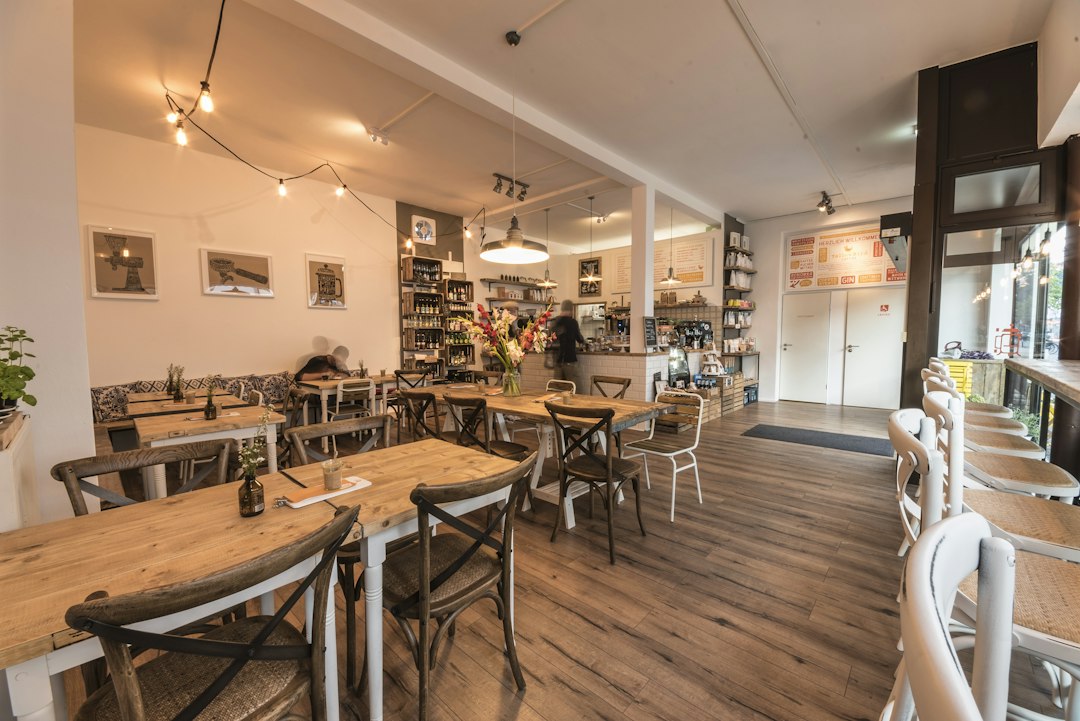
Stock photograph: Janosch Lino / Unsplash.
Which hospitality sales use which VAT rate?
The rates below apply to a VAT-registered business making the described supplies in Ireland. These are current treatments checked on 11 October 2026, rather than proposed Budget changes.
| Supply | Current treatment | What to check |
|---|---|---|
| Qualifying restaurant or catering food service | 9% | The food is supplied with the support services needed for immediate consumption |
| Guest or holiday accommodation | 13.5% | Keep the room separate from meals in a package |
| Alcohol, bottled water, soft drinks and sports drinks | 23% | Serving a drink with a meal does not move it to the food rate |
| Hot takeaway food, and hot tea or coffee | Generally 9% | Check the actual product and sale format |
| A cold takeaway sandwich | Generally 0% | Do not extend this to every cold retail food product |
Sources: Revenue’s restaurant and catering guidance, guest accommodation guidance and food sold by retailers. Revenue’s current rates table gives the numerical rates.
Restaurant service, takeaway or retail food?
Restaurant and catering services involve more than supplying food. Service elements supporting immediate consumption matter. Preparing and delivering food alone is not automatically a catering service; takeaway sales are generally supplies of goods.
A food producer selling packaged products must classify the product and transaction using Revenue’s retail guidance, even when selling to a hospitality customer.
Drinks need care too. Revenue distinguishes fruit juice within a restaurant or catering service from fruit juice sold as takeaway. The former falls within the food-service rate; the latter is standard-rated. Vegetable juices, soft drinks and bottled waters do not get the restaurant food rate.
For a mixed menu, create separate sale items where treatment changes with how something is supplied. A single product button used for every transaction can conceal the distinction.
A room-and-breakfast package: a worked example
This fictional hotel normally sells a room for €170 and breakfast for €30, both including VAT. It offers the two for €180, a 10% discount on the usual €200 total. Assume those separate prices are a fair basis for apportioning the package and there are no other elements.
Revenue treats accommodation and meals as a multiple supply: split the consideration on a fair and reasonable basis, with the relevant rate on each part. The hotel’s room-and-breakfast discount is allocated proportionately.
| Element | Price after 10% discount, including VAT | VAT rate | VAT included |
|---|---|---|---|
| Room | €153.00 | 13.5% | €18.20 |
| Breakfast | €27.00 | 9% | €2.23 |
| Total | €180.00 | Mixed | €20.43 |
To extract VAT from an inclusive amount, use the amount multiplied by the rate divided by 100 plus the rate. For the room, €153 × 13.5 ÷ 113.5 gives €18.20 after rounding. For breakfast, €27 × 9 ÷ 109 gives €2.23.
Coding the full €180 at 9% would show only €14.86 VAT, understating the example’s output VAT by €5.57. Nothing about the guest’s payment exposes the error: the till can still balance perfectly.
For your own package, ask for one sample receipt, the corresponding sales report and the accounting entry. Check that the allocation and output VAT agree in all three. That is a more useful test than asking whether the system has a 9% button.
The allocation needs to be supported by the real package and prices. These illustrative amounts are not a prescribed split for every hotel or B&B. See Revenue’s accommodation package examples.
Meal deals need an allocation too
A fixed-price meal containing food and a soft drink can include supplies at different rates. First establish whether the elements are separate supplies for VAT purposes. Where they are, allocate the selling price and any discount reasonably between them.
Keep the allocation in the sales records. A menu description such as “drink included” does not establish that no value belongs to it. Revenue explains the distinction between multiple and composite supplies and the records needed for discounted packages.
A lower VAT rate does not settle your pricing decision
For a qualifying meal priced at €109 including VAT, the 9% rate leaves €100 net sales. At the previous 13.5% rate, the same customer price left €96.04. The difference is €3.96, before any change in costs or sales volume.
Holding the customer price therefore leaves more net revenue under these assumptions. It does not prove the business has become profitable. Ingredient costs, waste, staffing and the number of meals sold still matter.
Before changing prices or committing to another cost, check the sales coding and compare actual net sales and contribution with your plan.
Check the whole route from sale to accounts
Start with the sales map, then test actual receipts and reports:
- List the sale types. Separate served food, takeaway products, drinks, accommodation and packages. Record the basis for unusual classifications.
- Check the systems. Review POS buttons, booking packages, delivery channels and accounting codes. A correct code in one system does not establish a correct import elsewhere.
- Run sample transactions. Test a mixed bill, a discounted package, a refund and a takeaway sale. Check both the customer’s receipt and the accounting entry.
- Reconcile gross takings, net sales and output VAT. Explain card fees, platform commissions and settlement timing separately. A net bank payout is not the original sale value.
- Review the margin and cash result. Use net sales for the trading analysis, while allowing for VAT and payment timing in the cash plan. Assign any correction to a person and date.
For advance payments spanning the July change, retain the payment, invoice and supply dates. Revenue’s accommodation guidance has a specific changeover example; simply applying today’s rate to every historic deposit is unsafe. Vouchers also have separate rules. Review those transactions individually rather than treating them as ordinary completed meals.
The VAT threshold guide covers the separate registration question. This article covers rates and sales coding once VAT applies.
Make the VAT treatment part of your monthly finance process
If sales categories, VAT codes and the bank settlement do not reconcile, the profit figure needs investigating before it informs the next spending decision. Clean bookkeeping is the foundation for useful financial input.
Our food and hospitality accounting page explains how Around Finance supports growing businesses in the sector. If you want ongoing help with the accounts, tax and decisions, book a Finance Fit Call.
Frequently asked questions
Is all hospitality income now taxed at 9%?
No. Qualifying food services moved to 9%, but accommodation and several drinks have different rates. Check the supply rather than applying a business-wide code.
Does the 9% rate apply to hotel rooms?
No. Guest accommodation remains at 13.5%. A package containing a room and meals needs a supported allocation between the elements.
Is all takeaway food zero-rated?
No. A cold takeaway sandwich is generally zero-rated, while hot takeaway food generally uses 9%. Other products can differ. Use Revenue’s product classifications.
Can we put a whole discounted package through one VAT code?
Only if that treatment is correct for the actual supply. Separate elements at different rates require an allocation; a genuine composite supply has different rules. Check the arrangement first.
Does a balanced till prove our VAT figures are correct?
No. The gross payment can reconcile even when the rate or package allocation is wrong. Reconcile the sale categories and VAT calculation as well as the cash.
What should we do if the July change was mapped incorrectly?
Keep the original reports and quantify the affected sales by category and period. Ask your accountant to confirm the corrections needed in the records, invoices and any affected returns before making a blanket adjustment.